


A trophic cascade starts at the top of the food chain and tumbles to the bottom. It is a domino effect from changes in ecosystems. The bottom of the food chain, algae, plankton, kelp, or grass, for example, feed the upper levels of the food chain. They depend on nutrients to thrive. But the upper level predators can also affect the bottom of the food chain, by controlling intermediate levels of the chain that feed on the produce. For example, the pressure predators like wolves put on prey like deer (consumer level), which suppresses that trophic level of an ecosystem, allows the next level down like grass (producer level) to thrive. The paradox is how predators, who we know kill different species of animal, give life to others.
Complex balances and interdependencies are at play in the health of ecosystems, a symphonic synergy of interactions in the web of life. If you pull one string of the web, you change the shape of many interconnected others. A famous tropic cascade is gloriously depicted in this short video, “How Wolves Change Rivers” about the effect of the reintroduction of wolves to the first American national park, Yellowstone.
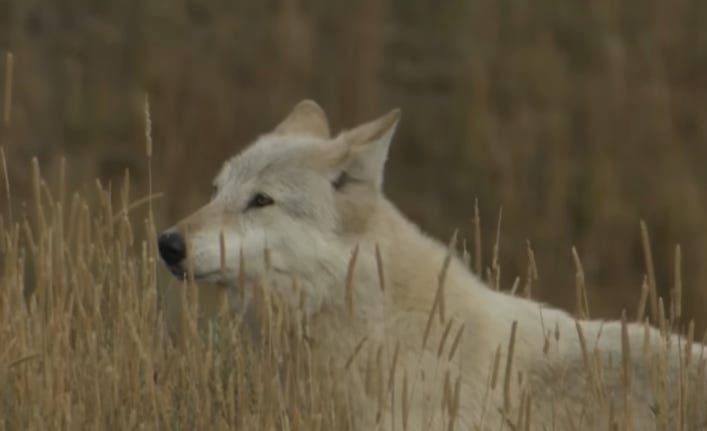
It tells the story of a trophic cascade of events leading from the reintroduction of wolves to Yellowstone Park in 1995 to changing the course of Yellowstone’s rivers. In between is the regeneration of series of ecosystems that involve the predators—bear, coyotes, raptors—and prey; ecosystem builders—beavers, bushes, and trees—and denizens—songbirds, voles, muskrats, tadpoles; and plant life—aspens, berry shrubs, grasses.
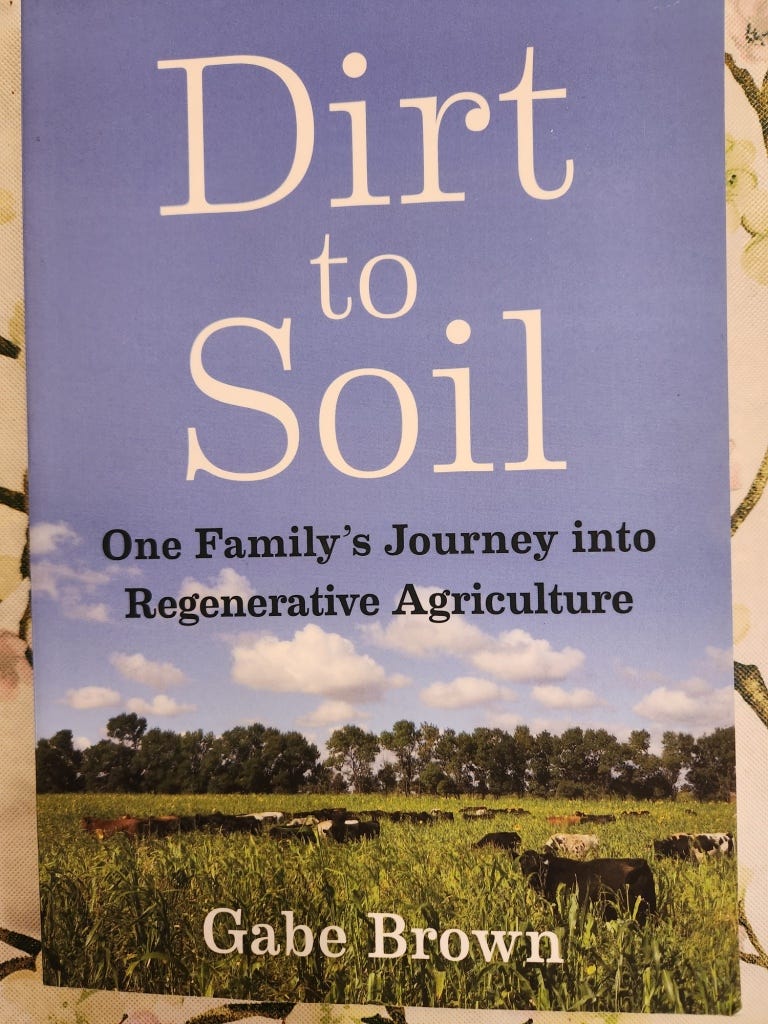
Cascading ecosystem effects aren’t limited to human scale. I’ve been reading about regenerative agriculture in Dirt to Soil, authored by Gabe Brown (with help). It’s a beautiful story of the regeneration of dirt into it’s own biological ecosystem, soil. Said purveyor Jack Stahl, a farmer from Northwest Alberta, Canada, “We cannot keep killing the biology.” His words capture the irony of using herbicides, tilling, and then non-organic fertilizer to grow crops. (More on that in another substack, no doubt.)
Then this evening, I received in my email this beautiful poem entitled with the concept that seems to me this evening to encapsulate and encompass both of the above types of revivification.
Trophic Cascade

After the reintroduction of gray wolves
to Yellowstone and, as anticipated, their culling
of deer, trees grew beyond the deer stunt
of the mid century. In their up reach
songbirds nested, who scattered
seed for underbrush, and in that cover
warrened snowshoe hare....Don’t
you tell me this is not the same as my story.

From the title poem of Camille Dungy’s Trophic Cascade, Wesleyan University Press (2017) [You can find the whole poem here: https://www.amazon.com/Trophic-Cascade-Wesleyan-Poetry-Camille/dp/0819577197]
Of Camille Dungy’s memoir, Soil, poet Ross Gay writes, “The deepening demands we witness what erodes or frays or severs the stabilizing roots between us. Whatever seduces us into believing we are not in fact connected. To each other, to the earth. The soil though, just like Soil, teaches us we are connected. And fundamentally so. Let us try to listen. Let us put our hands in.”
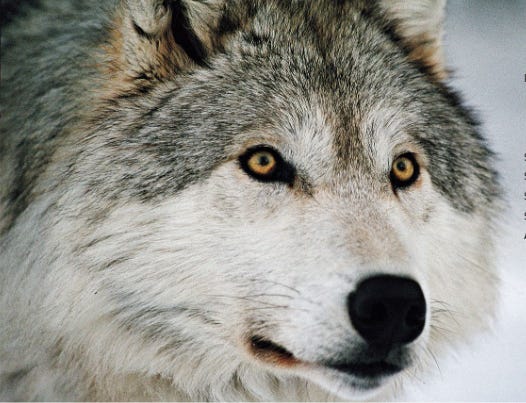
It’s a flowering of life, in the poem, tied to the flowering of life in the female body, a microcosm of the larger landscape. Our conscious intelligence sometimes makes us feel separate from nature. But people and nature are as intimately entwined as any of the other animals on Earth. This regeneration of life from the reintroduction of the Yellowstone wolves is more thoroughly explored in the National Geographic educational video, which includes how it improved the lives of the humans surrounding the ecosystem
Trophic cascade, not in its literal meaning, but in its descriptive connotation, seems a good concept to describe the cascading effect of life returning to the soil when we stop killing the biology.

The biology of the soil is familiar to you—the rich, sticky clumps of black earth that house earthworms and nematodes and other creeping crawling life. Further down and less familiar might be the rhizomes that exchange nutrients with the plants roots—plant roots making sugars from sunlight available to rhizomes, rhizomes (themselves looking like tendrilled horizontal webs of white root hairs) making minerals from the sandy loam available to plant roots.

From the landscape of Yellowstone Park to the soil beneath your feet, vast ecosystems commerce continually in life and death on scales miniscule and tremendous. We are surrounded, matrixed, ensnared, nurtured and sustained by webs of life around, above, below, and lancing through us. We balance on invisible, gossamer threads of life in a web going back to the first protozoan in the greatest primordial sea on Earth—at once so precious, delicate, and fragile and again so robust and resilient.
William Blake expressed this wonder in the famous lines from “Auguries of Innocence” he wrote before his death in 1827, but that were first published 1863:
To see a World in a Grain of Sand
And a Heaven in a Wild Flower
Hold Infinity in the palm of your hand
And Eternity in an hour

Thanks for the wonderful post, Linda! I hadn't heard of Trophic Cascades before now, but the concept fits perfectly with my own limited understanding of how all life on earth - and even the parts of our planet that we don't always think of as being "alive" are intimately connected in a holy collaboration.