

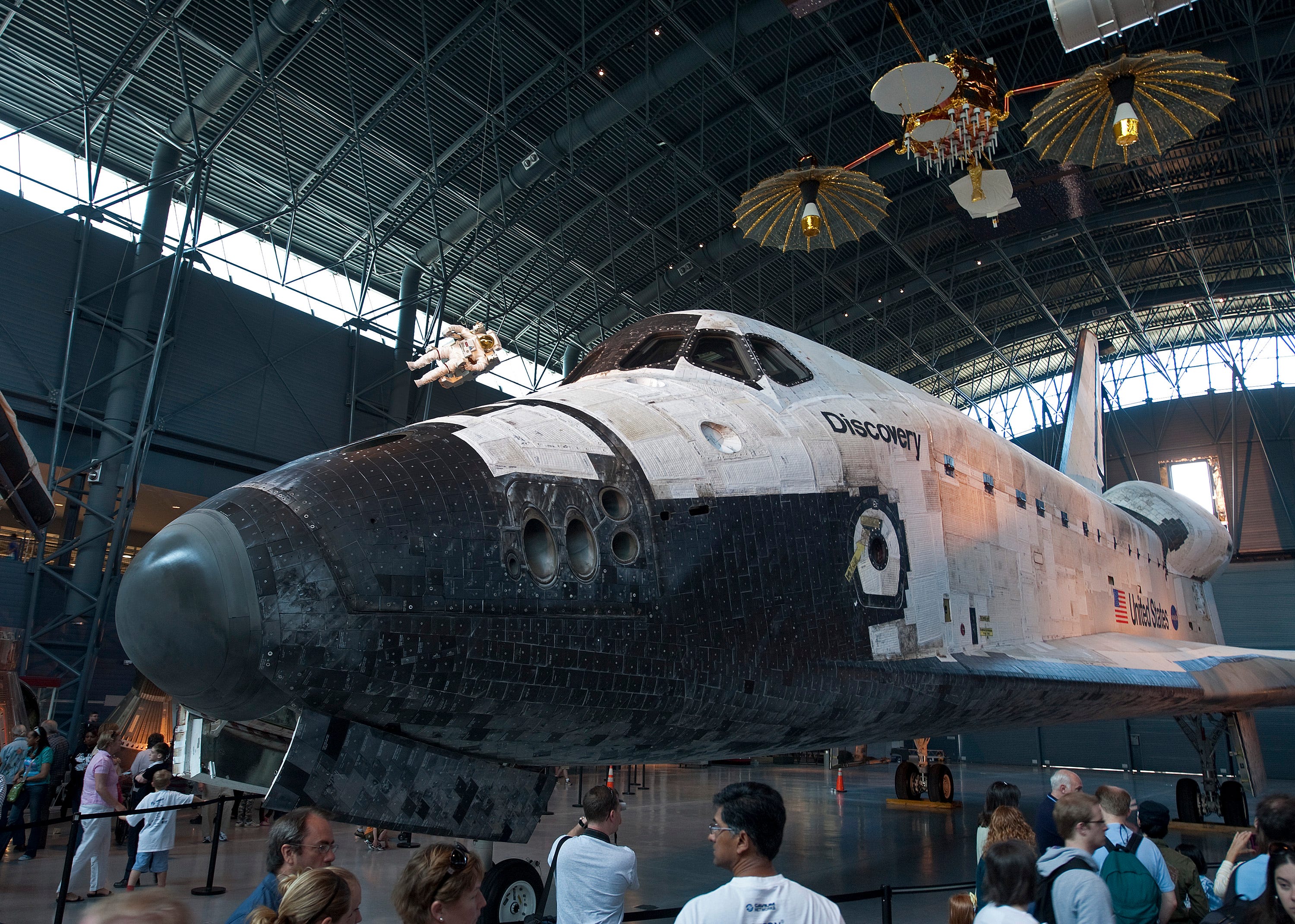
This ship was meant to fly. It was meant to carry people into space, to shuttle them to an operating station orbiting the Earth and back to Earth again. It carried my sister into space. Her goal, in her job interview with Orbital Sciences in 1980, was to help the United States become a “space faring nation.”
After Janice Voss graduated from MIT with a doctorate in aeronautics and astrophysics, she joined Orbital Sciences Corporation, a stepping stone to becoming an astronaut. She flew with the crew who took Discovery almost to the Russian Mir Space Station in 1995, the first of the Mir Rendezvous flights. Space Shuttle Discovery Commander Jim Weatherby said at the point of closest approach, “The next time we approach, we will shake your hand and together we will lead our world into the next millennium." Space Station Mir Commander Alexander Viktorenko replied simply, "We are one. We are human."
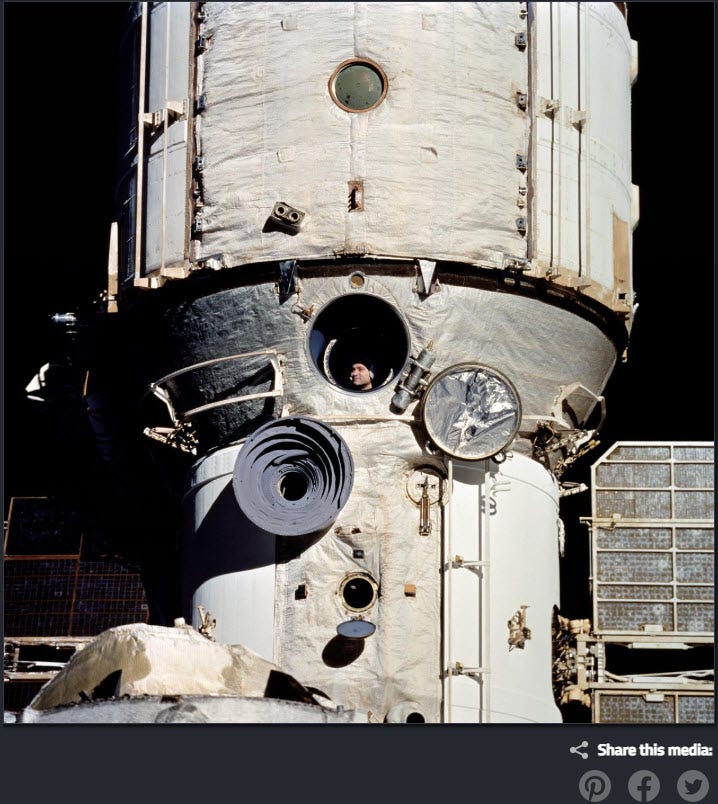
Above, Cosmonaut Valeriy Polyakov looks out of Mir’s window February 6, 1995, toward Discovery during rendezvous operations. Onboard Discovery were astronauts James D. Wetherbee, mission commander; Eileen M. Collins, pilot; Bernard A. Harris, Jr., payload commander; mission specialists C. Michael Foale, Janice E. Voss, and cosmonaut Vladimir G. Titov.
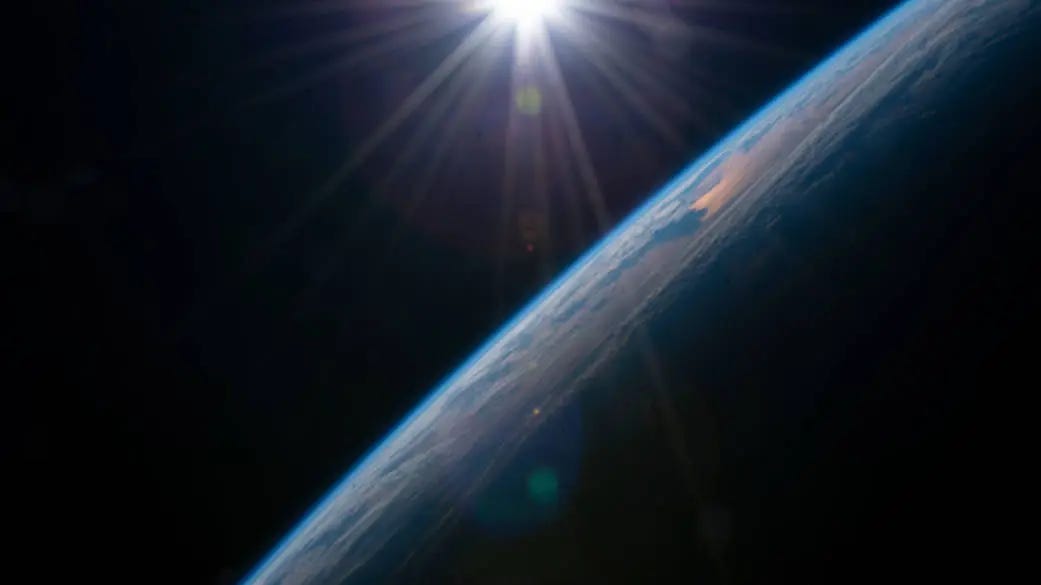
Museum exhibit Discovery stands restlessly amidst ghostly whispers—the voices of past occupants opening the radiant doors of the shuttle payload bay to reveal Earth’s fragile beauty or struggling to “batten down the hatches” and close up and lockdown all the technology so the shuttle could safely land again. And the voices of the future—when will we have such an advanced and yet cozy ship to travel to our near-Earth way station again? And where will we take off from there? What ships of the ocean of space will be the next home for the spacefarers we send into the cosmos?
“A ship in harbor is safe, but that is not what ships are built for.”
That quote was often used by U.S. Navy Rear Admiral Grace Murray Hopper, from John Shedd’s, “Salt from My Attic,” in 1928. The shuttle now has a safe haven from the storm. But that’s not what it was for. The creative aspirations of thousands, maybe millions, of people created this amazing spaceship that could be launched into space and survive the heat of re-entry, delivering people and cargo like the Hubble Space Telescope, the modules of the International Space Station, the Tracking and Data Relay Satellites (TDRS), and the Chandra X-Ray Observatory. Of 135 flights, in all but two horrible, fiery explosions, the Space Shuttle delivered its precious cargo of astronauts safely to space and back to Earth. It was a stunning technological accomplishment, a conception that would have seemed impossible at the beginning of the Apollo Program, Apollo, which cracked open the impossible goal landing a human onto the surface of the Moon.
As Peter Pruyn, who trained crews on the Shuttle systems described it, “One of the miracles of the space shuttle is that, while all flying vehicles have some systems for guidance, navigation, and flight control, the Space Shuttle is the only one that has those systems across all three domains of flight, that is, flying as a rocket in [and outside of] the atmosphere…; flying as a space vehicle, a spaceship in space; transitioning from space to atmospheric flight control; and then being a glider. It really is a miraculous feat of engineering.”
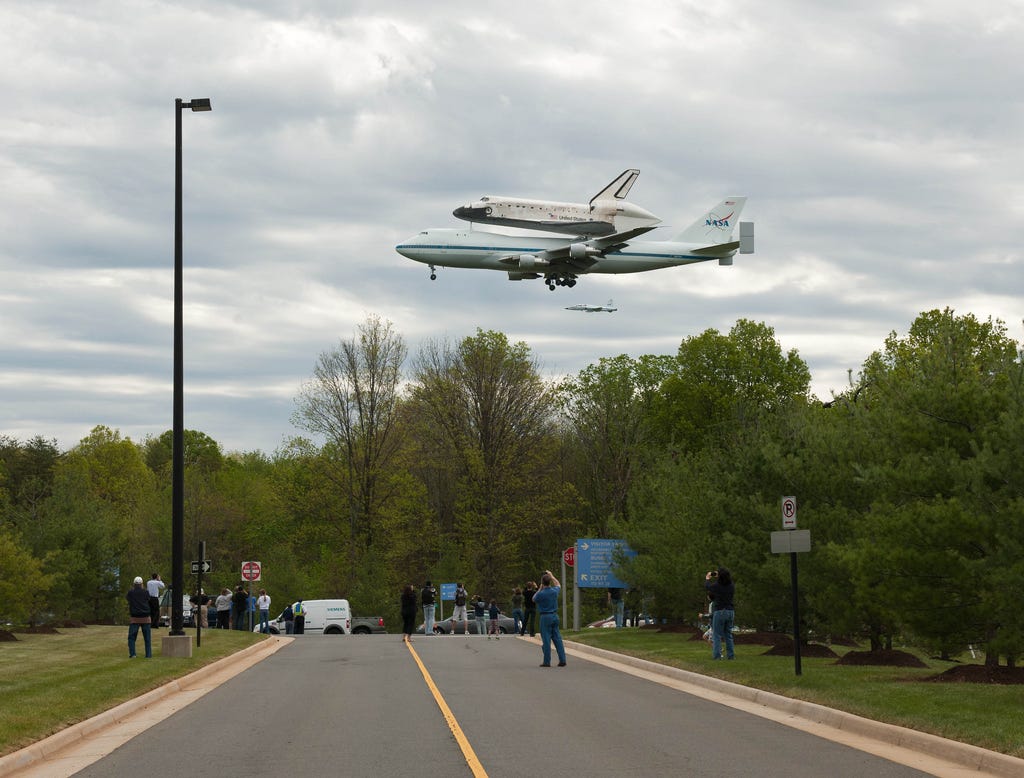
It is painful seeing the great ship of space, the Space Shuttle Discovery, in a museum. It is painful seeing my sister Astronaut Janice Voss represented in a museum. Her display at the Discovery Center in Rockford, Illinois, is inspirational for children. It is a very dignified, honored death, but so final that there is no more life in that story. The last chapter has been written, and there is no more story to come. It was bound to happen in the life of the shuttle, too—that it would be put in a museum for us to remember the great moment it represented—the achievement and accomplishment that it epitomizes.
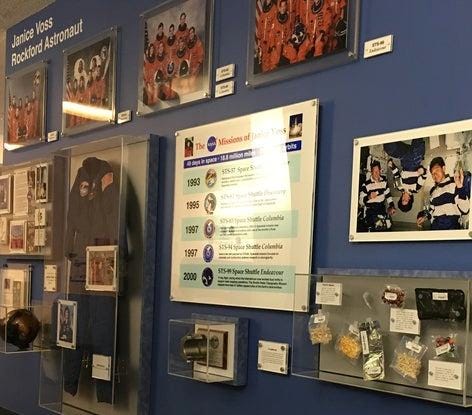
The hope is that the achievement will be diminished over time as what was accomplished is surpassed to the point where it looks small to those living the future it engendered. But that isn’t guaranteed. Sometimes, it marks a high point that we never reach again—or at least not in the same way. May that not be the case in our exploration of space. May that not be the case with Janice’s life. May her pathfinding for women astronauts and space science pave a path that many other will follow and extend into unimaginable unknowns.
We’ve returned to the Apollo accomplishment, a capsule to deliver people to the Moon—a better, more sophisticated conception perhaps. Will Apollo’s be the same fate of the Space Shuttle? To inspire a future, more advanced shuttle of people to space?
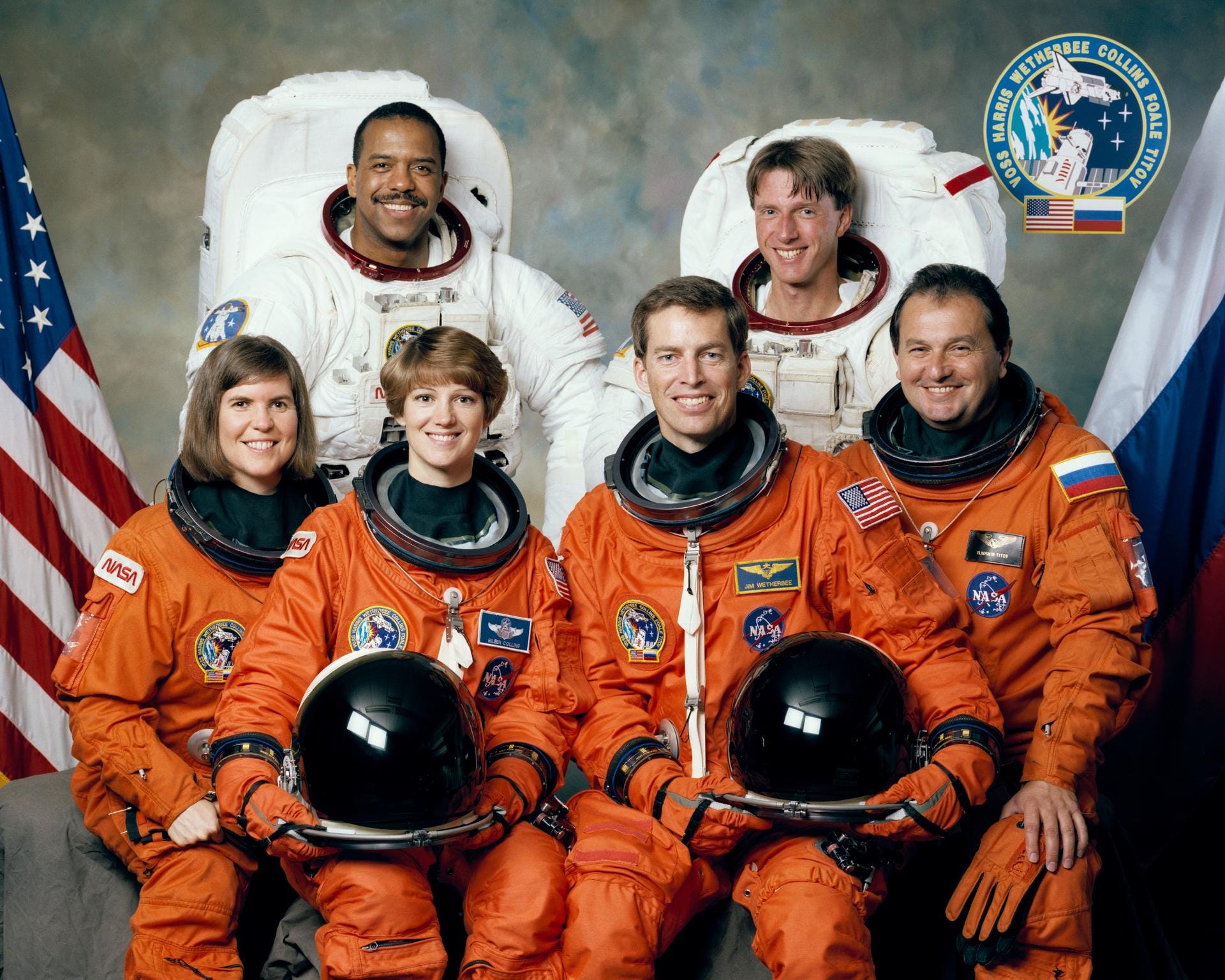
My sister, and every one of the astronauts and space explorers from other countries, who did incredible work in space, furthered the path toward America and partners becoming “space faring nations.” Their lives pointed us toward an aspirational future--not as a backup to get humans off the planet in case we make this one uninhabitable. (If you think keeping this planet livable is hard, try terraforming another one.) Or to colonize other planets, beat the other guys to it, or to be the first to extract whatever wealth space bodies have to offer. Those may all happen. Self-interest is a legitimate motivator. But I contend it’s not the most powerful or enduring motivation. We have to know what or who is out there. We need to better understand our place in the cosmos. Are we, sentient beings, on this beautiful blue marble in the void of space the only ones? Are we alone?

The great adventure, the infinite journey of space is a beacon for aspiration and creative innovation. It always has been. It always will be. Don’t lose sight of that during legitimate budget fights and international competitions. We are going. One way or another.
In the Circle of Life, every ending is a beginning. I appreciate hearing your thoughts on Discovery and Janice, and share your hope for continued exploration and improved international cooperation. Love Viktorenko's quote: "We are one. We are human."